

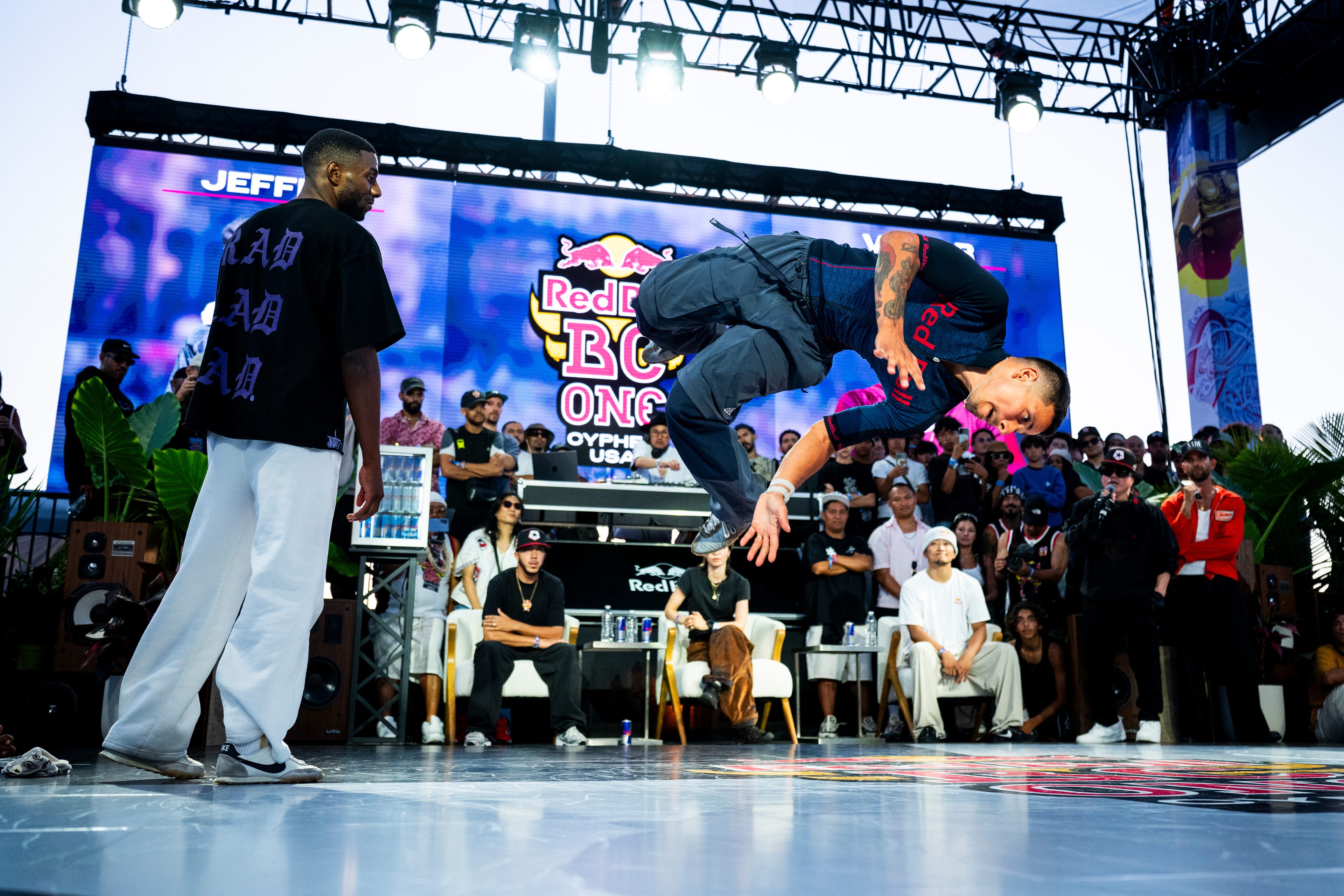
We headed to San Diego’s Red Bull BC One USA National Final to explore breaking’s place in culture today. Hip-hop changes over time, like any other genre, and some of its foundational elements lose their influence and significance for newer audiences. JAY-Z famously suggested that graffiti and battling perhaps shouldn’t be considered part of hip-hop anymore.
Breaking has also faded from the spotlight. It is one of hip-hop’s four pillars, alongside DJing, MCing and graffiti. But while DJs became global stars and influential producers, MCs became world-famous rappers, and graffiti artists found their way into galleries, breaking has struggled to maintain the same visibility among contemporary audiences. Why has it fallen behind, and what can we do to help preserve the art form?
We traveled to San Diego for the Red Bull BC One USA National Final to understand what is happening within breaking and what place it currently holds in the wider culture. The question feels especially relevant after Raygun’s controversial performance at the 2024 Olympics and the recent Netflix documentary that brought the conversation back into the spotlight.
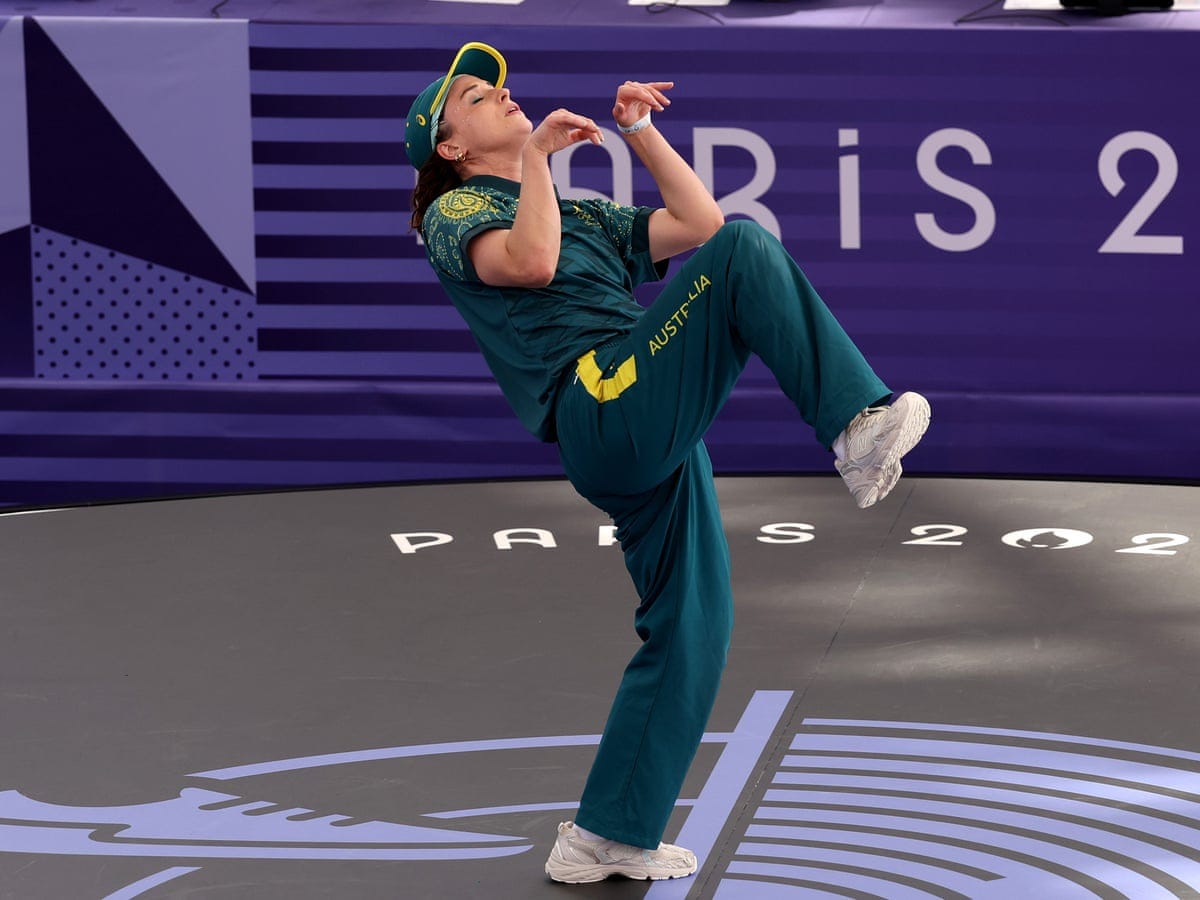
When breaking made its Olympic debut at Paris 2024, Australian dancer Rachael “Raygun” Gunn became its most controversial face. She lost all three of her battles without receiving a single judges’ vote, while her unconventional moves, including a kangaroo hop, went viral and sparked widespread ridicule. The backlash extended to breaking itself, frustrating dancers who had hoped the Olympics would showcase the art form’s skill and creativity.
Breaking was left out of the 2028 Los Angeles Olympics, although that decision was made before the Paris Games and the Raygun controversy. After Paris, prominent breakers reported that brands pulled back and prize pools shrank, adding to concerns about the art form’s public image. Netflix’s recent documentary “Untold Raygun: Breaking Badly” revisits the controversy, with Raygun standing by her unconventional approach rather than apologizing for the performance itself.
From Run-DMC’s “It’s Like That” to Missy Elliott’s “Work It,” breaking remained highly visible in hip-hop videos for decades. Movies such as “Wild Style,” “Beat Street” and “Breakin’” introduced it to a mass audience. Today, that visibility has faded. Where does breaking live now?
Red Bull remains one of the few major companies consistently supporting breaking. It launched the annual BC One competition in 2004 and continues to organize events around the world. Within the breaking community, BC One is a major institution. Outside of it, however, the competition is still not widely understood. Why?
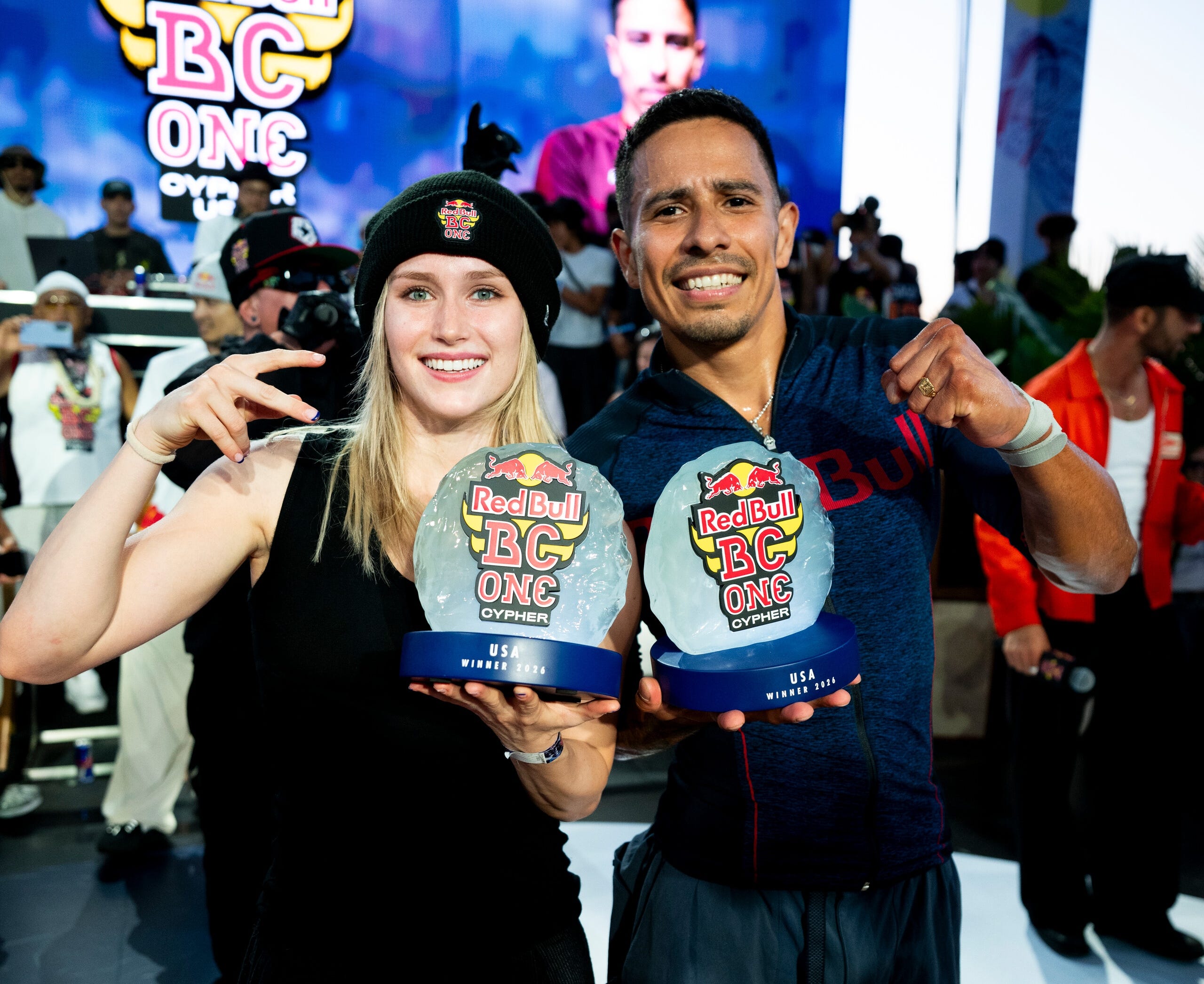
At the BC One USA National Final, where B-Girl Blonde (Saree McIntosh) and Victor Montalvo won, we watched every performance and were struck by the dancers’ athleticism, flexibility, creativity and control. We also spoke with leading figures in the scene about where breaking stands today, its relationship with hip-hop and how the culture can move forward after the Raygun controversy.
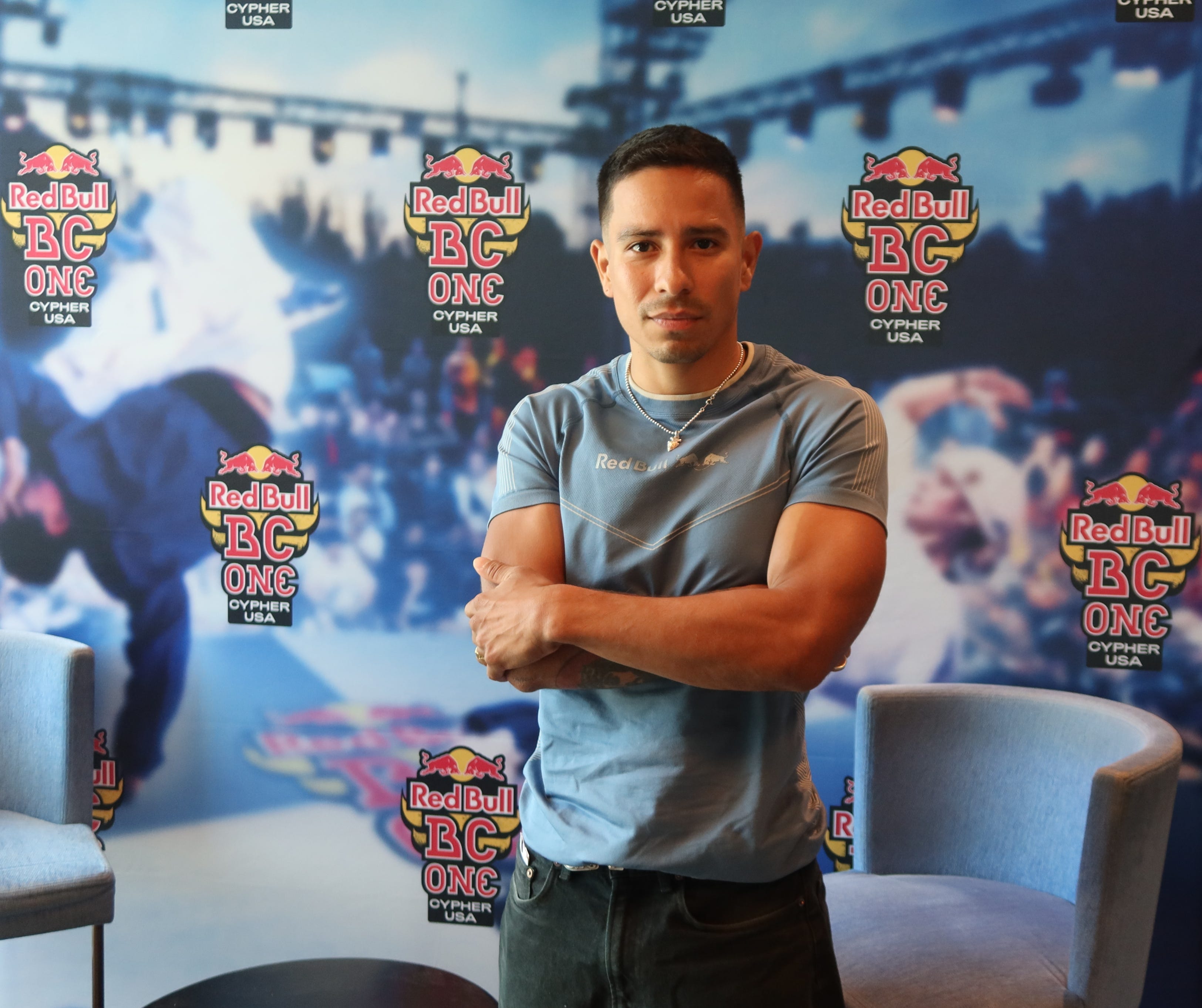
One of them was the winner Victor Montalvo, who’s also a bronze medalist from the Paris Olympic Games and a two-time BC One World Champion.
You won bronze at the Paris Olympics, which is amazing. Would you say that breaking has changed since the Olympics, especially with the Raygun incident?
It’s just the internet. They love trolling. The internet loves trolling, and they make stupid things famous. They love doing that, and then they get mad: “Why is this person famous? Why is that thing famous?” You’re the one making it famous.
Breaking has historically been closely connected to hip-hop. Today, seeing it from the outside, that connection feels much less visible. Where does breaking stand within hip-hop now, for you? Do you still see that connection? How close is it, and how do you perceive it?
I feel like the connection is not as strong anymore. If you look back at the 1990s and early 2000s, you always saw breakers in the music videos, dancing while the rappers were there rapping their songs. Nowadays, you rarely get to see that, so there’s not much connection. It’s like we’re just doing our own thing.
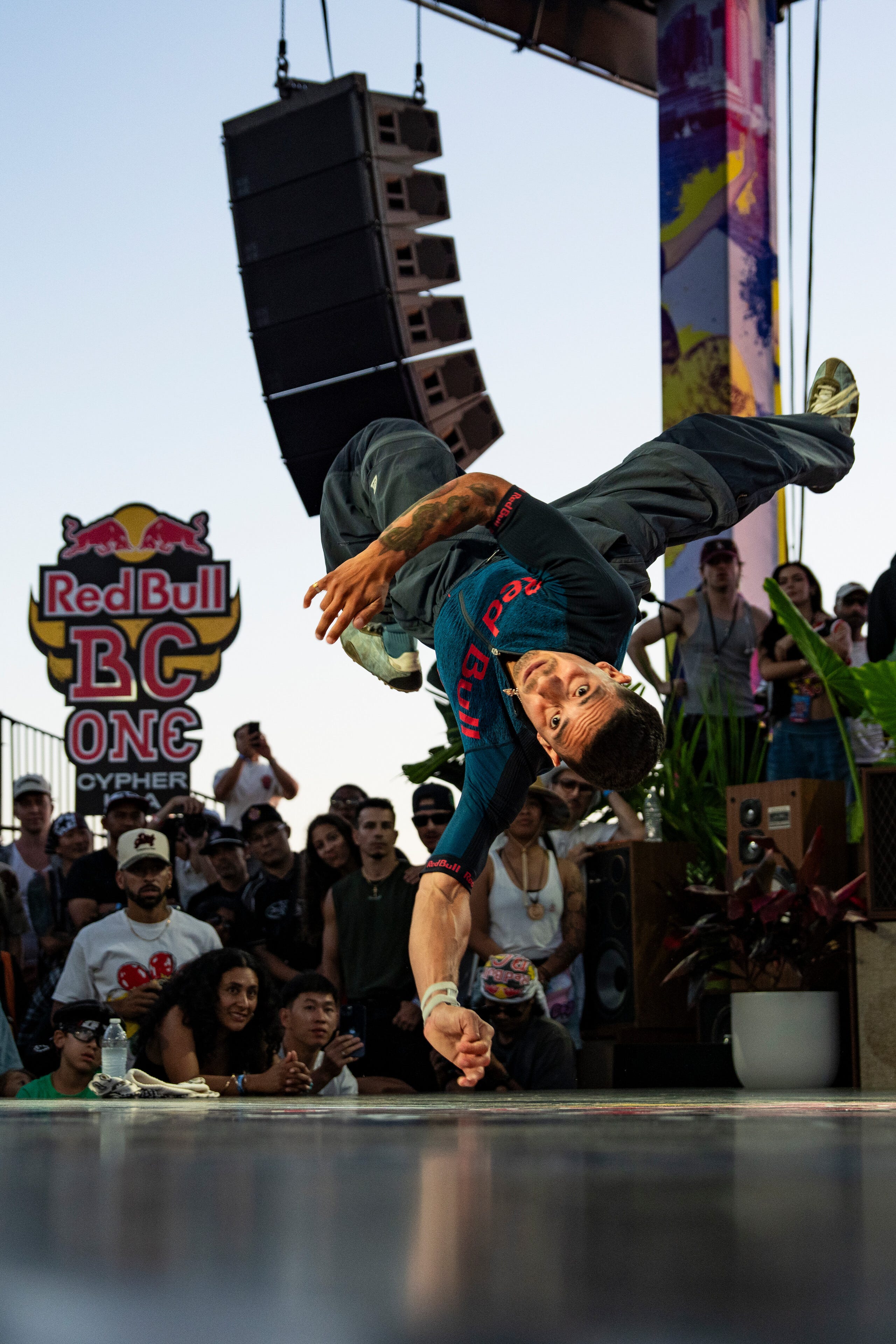
What else could have been different at the Olympics?
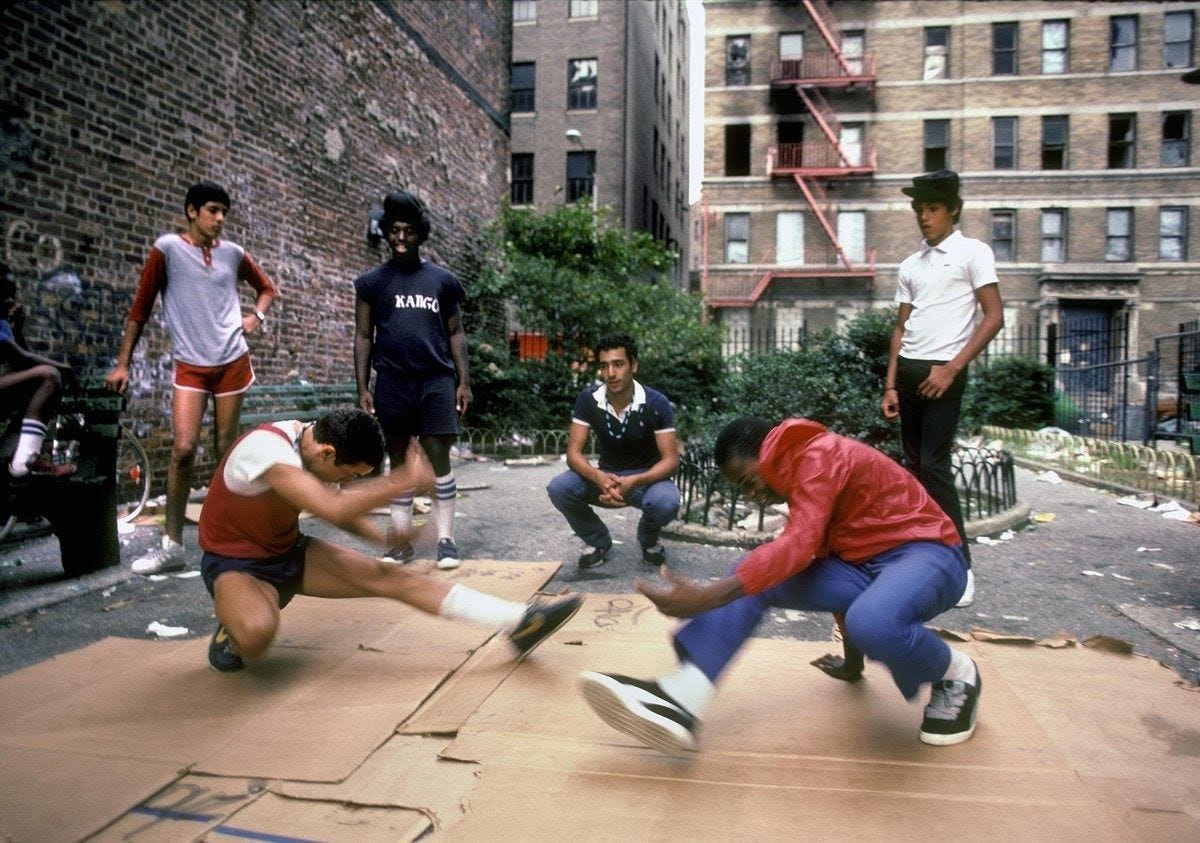
It’s just the small things. The music was on point. Everything else was on point. But sometimes it felt like it was people’s first time watching breaking since the 1980s. They’re used to watching it in music videos: “Oh, that’s that old-school stuff you do on the street on cardboard.”
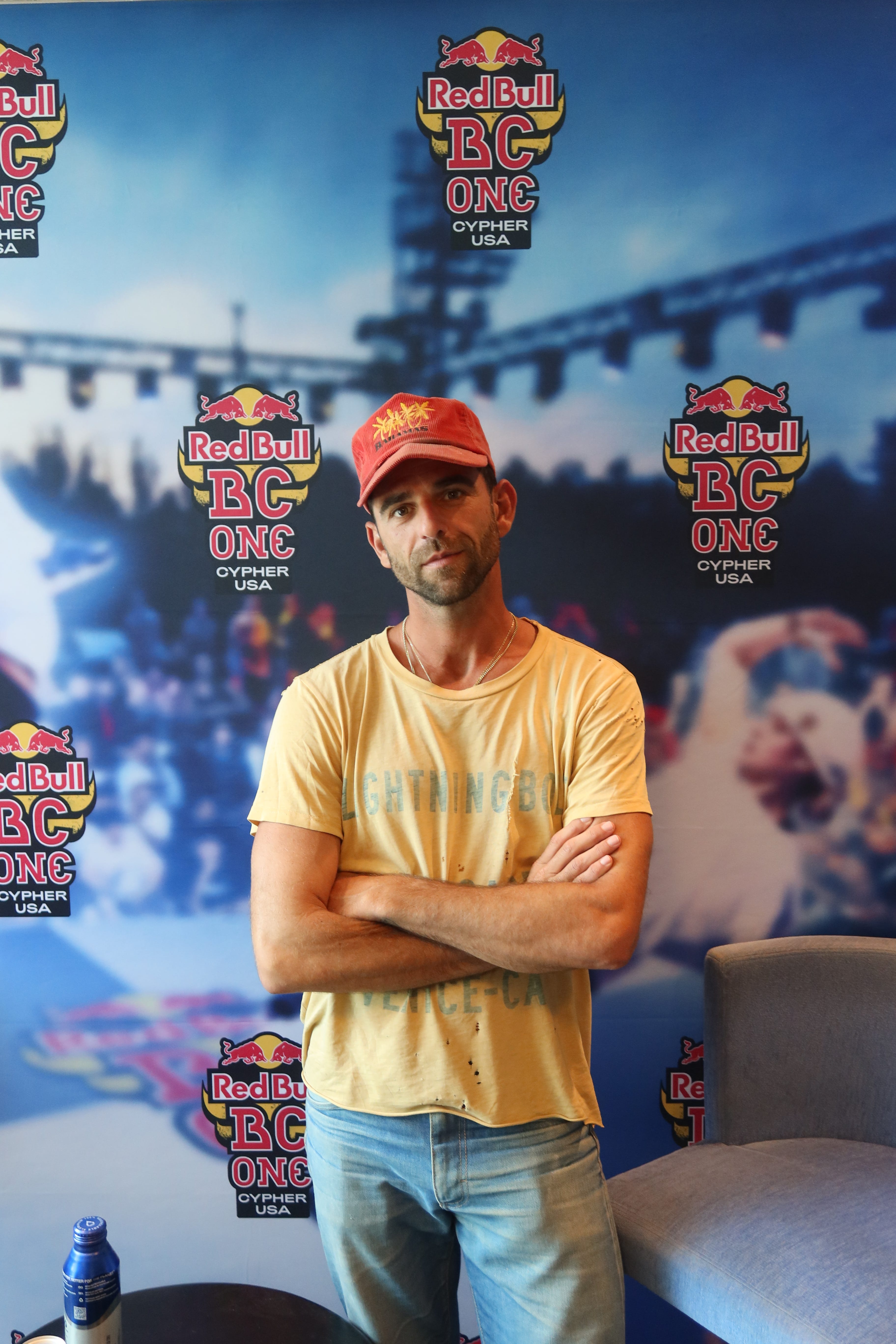
David “Kid David” Shreibman, who hosted BC One in San Diego, represents another side of the culture. Beyond his career as a breaker, he is an actor and experienced presenter who worked with Red Bull and covered breaking for NBC during the 2024 Olympics. His ability to explain the culture clearly gives him a valuable perspective on how it is perceived by mainstream audiences.
What is Red Bull in the current culture and how the brand helps breakers?
I think Red Bull has stood at the front of that for the better part of two decades. More, actually. What Red Bull has done has kind of solidified competitive breaking as a real thing, at a level where it can hold its own against other sports and competitions. Red Bull has led the charge and continues to be the biggest player in competitive breaking.
You were a commentator at the Paris Olympics in 2024. How has breaking changed since the Olympics and the drama around the Raygun incident, which probably every media outlet is bringing up? Especially since she just released a Netflix documentary.
Unfortunately, because of what happened with Raygun at the Olympics, if we’re talking about a mainstream audience that didn’t have a good point of reference for what breaking is before the Olympics, that silly, mean, negative moment overshadowed a lot of the really good things that happened.
In the mainstream’s eyes, that moment is now associated with breaking, especially for a lot of the audience that didn’t know about BC One.
What’s interesting is that all people really had to do was be interested in the second day at the Olympics, when all this amazing stuff was happening, or realize that Raygun didn’t score any points and that the people she was competing against were actually amazing.
There would have to be a genuine interest from someone to dig a little deeper, and I think you can’t force that.
If you were sitting at home and competitive chess came up, and something funny happened, what would make you want to see what’s actually going on with competitive chess? It would be curiosity.
The hope would be that the Olympics and breaking in general make people curious to see what’s really going on. Nowadays, with the internet, it doesn’t take much to actually see.
You’re either curious or you’re not. I think that’s not just breaking; it’s with anything. You could take it at face value. There are tons of silly sports in the Olympics.
The only difference, and this is what I’ll say, is that breaking is so interesting because it comes from a culture. I don’t know that curling comes from a culture that has music, writing, rapping, and all these things.
In my opinion, the curiosity should come a little easier because you’re dealing with something that comes from an actual culture.
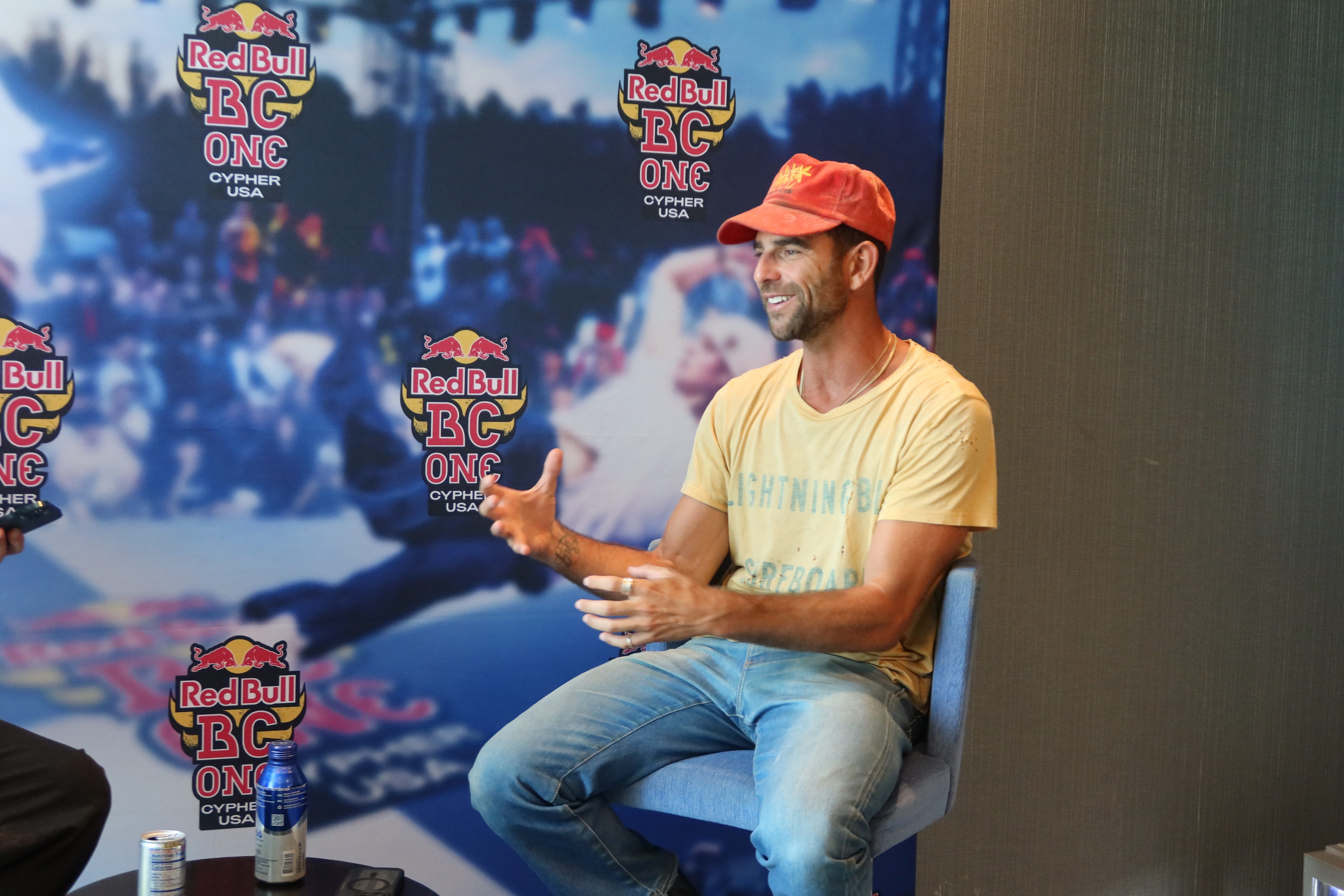
According to people within the community, the controversy also affected brand deals and sponsorship opportunities that had been discussed before the Olympics. For some breakers, this made it harder to build sustainable careers and focus fully on their craft.
So, how has it changed since? I think it has become more difficult for full-time b-boys and b-girls to be taken seriously by corporations and sponsors. There’s a reluctance for big brands to touch breaking.
On the other side, there have been good things. I know, for example, that in China, the government still has programs supporting young b-boys and b-girls, training them and flying in coaches. There was a lot of infrastructure built around training and teaching in different countries.
It looks different in different countries, but I think it did solidify the seriousness of competitive breaking in a lot of places, if you ignore the Raygun stuff.
Breaking has always been part of hip-hop, but now it feels like it’s not as connected anymore, and it’s not as visible. Where does breaking stand within hip-hop for you now? Is it still part of the culture, or is it something of its own?
Breaking will always be part of hip-hop culture. Breaking is the dance of hip-hop. If you say “hip-hop dance,” you’re talking about breaking. But I think what you’re saying is very valid. It’s important to make the distinction between competitive breaking and breaking.
The newer generation and competitive breaking seem to have gotten farther from the actual culture. But I do think Red Bull does a good job of trying to keep the connection alive between this really big, shiny object and this gritty, raw, cultural thing.
It’s a hard connection to maintain. One of the bigger problems is that the newer generation is disconnected from the culture themselves. The people doing the dance, this new generation of kids, are themselves disconnected from hip-hop culture. Therefore, the entire thing becomes disconnected from hip-hop culture.
What do you think needs to happen to bring breaking back to the forefront of the culture?
We teach the youth. Bless all the organizers who are throwing raw events, aren’t making a lot of money from them, and are doing it for the love. And continue to put stuff out that represents the culture.
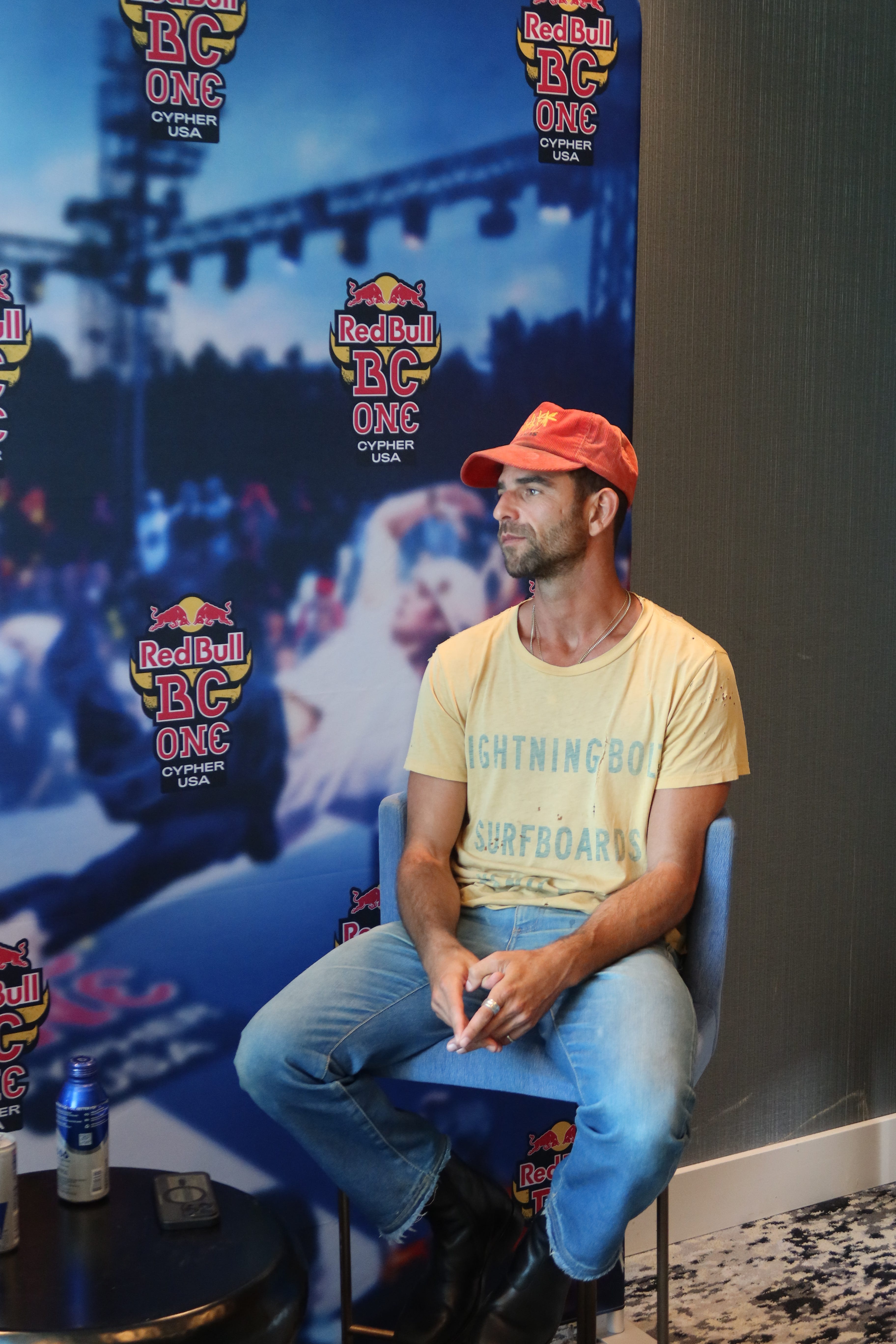
How do you financially structure your career and life to do breaking but also make money from it?
Being a professional dancer is not a lucrative career for most. There’s probably about 0.5% for whom it’s a career. I’m one of them. And I know it’s the same as acting — 98% of actors are unemployed.
I seriously urge people, and I say this in my workshops, when I travel, and when people ask me for advice: don’t be afraid to have a real job. When I say “real job,” I mean a career job or a nine-to-five.
So many dancers and artists put pressure on themselves, thinking they’re not an artist unless they’re doing it full-time and making money from the craft. But I would say the opposite. You’re always an artist.
I have a lot of skill sets, and that’s how I’ve been able to make a career out of it. I think it’s also about saying yes and not being scared.
Would you say that people in the breaking community are too focused on the past of hip-hop in terms of music?
I’ve always been more interested in newer sounds. But this is the thing: I also know every fucking word to all the classics. I know all the songs because I was a hip-hop kid.
I think it’s your job as a b-boy or b-girl: you have to know all that shit, all the classics.
But I always encourage b-boys and b-girls to dance to different stuff.
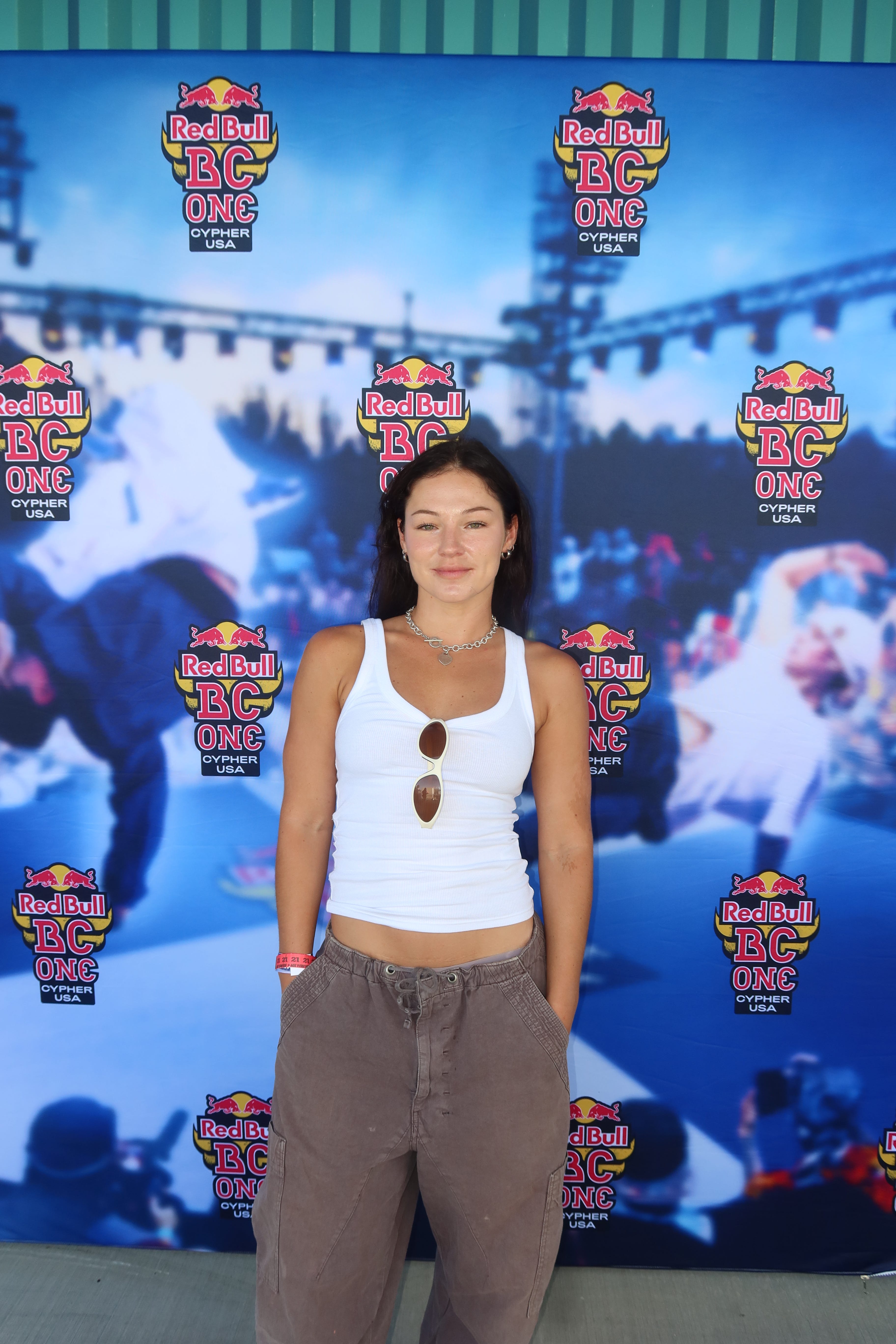
B-Girl Kate (Kate Pavlenko) is a Ukrainian breaker based in Los Angeles. She went through a lengthy preparation and qualification process to represent Ukraine at the Olympics, but the competition was overshadowed by the controversy surrounding Raygun, which also affected her own career.
How did the controversy surrounding Raygun affect your career?
Immediately after the Olympics, I received many offers. I was getting emails and discussing some exciting projects, but then all of them disappeared. That is how the situation affected me personally.
Red Bull remains one of the few major companies investing heavily in breaking and helping keep its international competition circuit alive. That support is important, but organizing events is only one part of the challenge. How breaking sounds, how it looks and how it introduces itself to younger audiences will also shape its future.
Breaking is deeply rooted in tradition, and that history is part of what makes it special. At the same time, the culture can sometimes feel difficult for outsiders to enter. Becoming more open and contemporary does not mean abandoning its foundations but rather means finding new ways to connect them with the present.
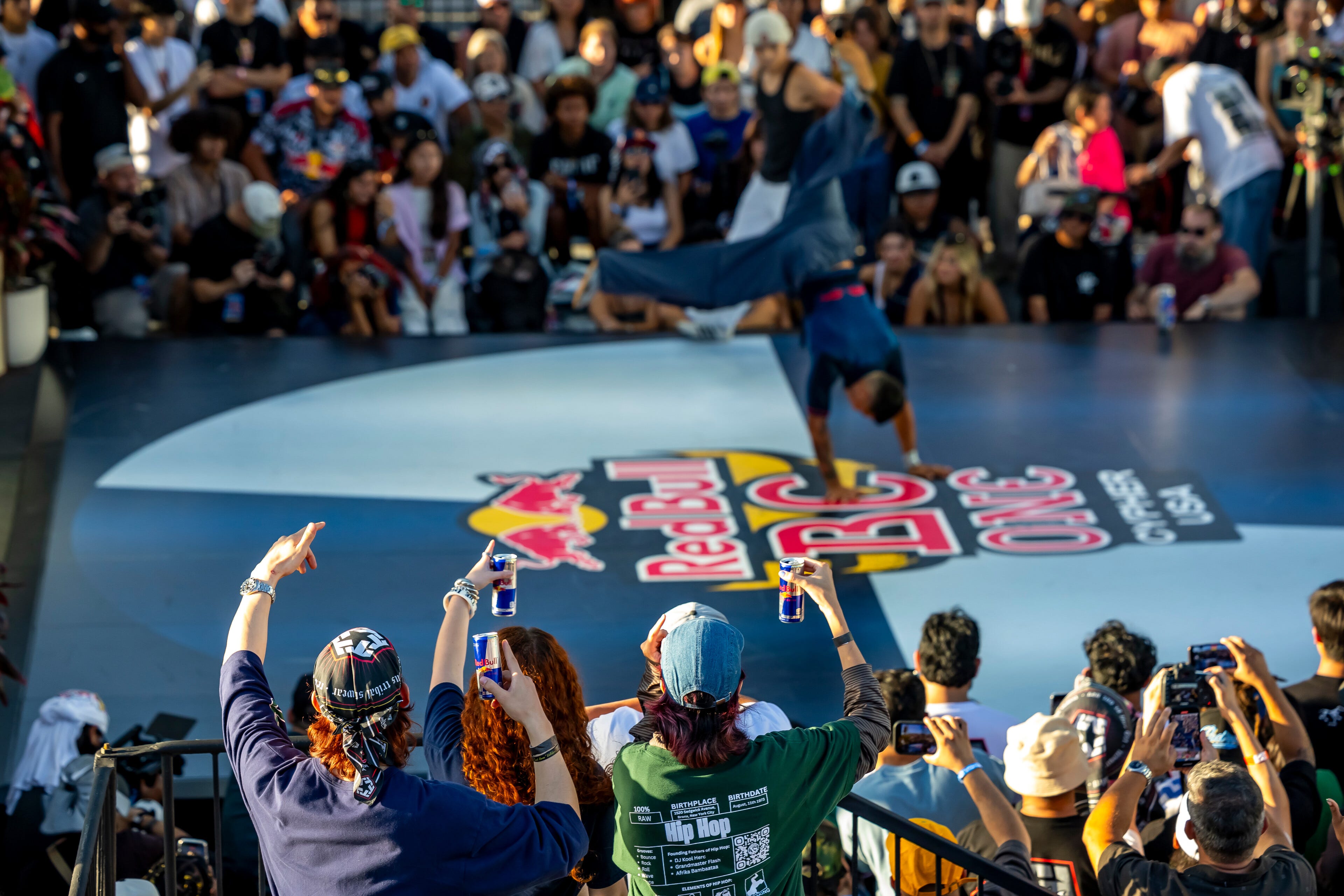
The dancers showed an incredible level of athleticism and technique, while also reminding us that breaking has always been connected to personal style and individuality. Contemporary streetwear brands could become part of that evolution, helping dancers build a stronger visual identity around their performances.
The event mostly used 1980s and 1990s beats and featured Xzibit, but the crowd’s immediate reaction to a Tyler, The Creator song showed how naturally breaking can connect with the present.
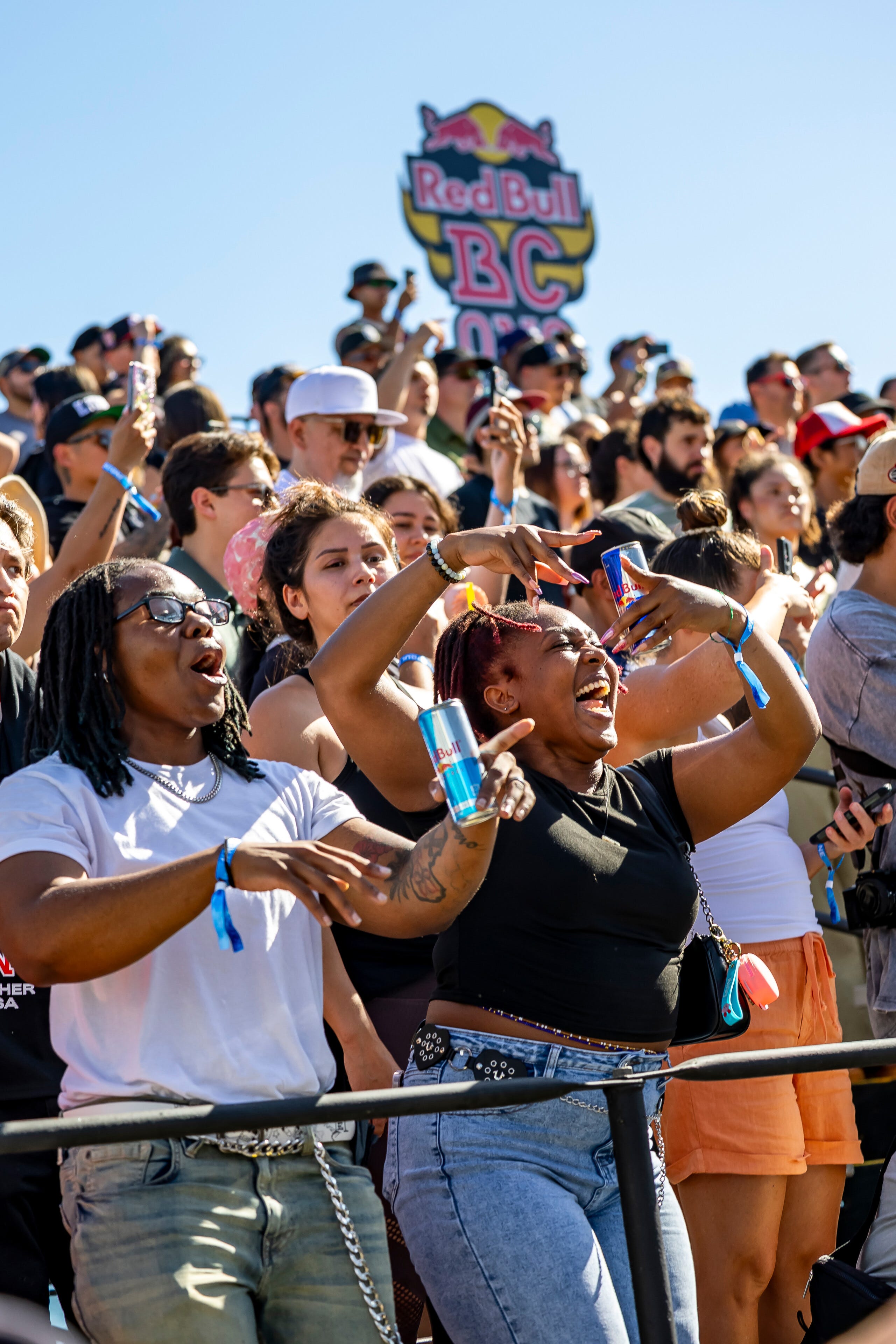
Artists such as AzChike and Westside Gunn, alongside producers like Ovrkast., Conductor Williams, BNYX and Cardo, carry the energy and influence of earlier hip-hop while making it feel current, offering a natural bridge between breaking’s history and its future.